

Reusing an Existing Survey and Providing an Affidavit or Declaration
Why do I need to locate the existing property Survey at the time of listing? What else do I need with the Survey?
In making an offer on a property, Buyers often ask the Seller to provide a copy of their existing Survey along with an Affidavit or Declaration form where the Seller discloses any known changes since that Survey was done. If the Seller promises in the contract to provide this existing Survey, but then cannot locate and provide it before the deadline, the contract says that the Buyer can order a new Survey at the Seller's expense.
This is why the Seller needs to be able to provide the Survey to their listing agent from the beginning – so that you know that it’s actually a Survey (not some other drawing of the property) and that you will be able to produce it quickly for a Buyer who wants to try to reuse it for their purchase.
Let’s unpack this…
What is a Survey?
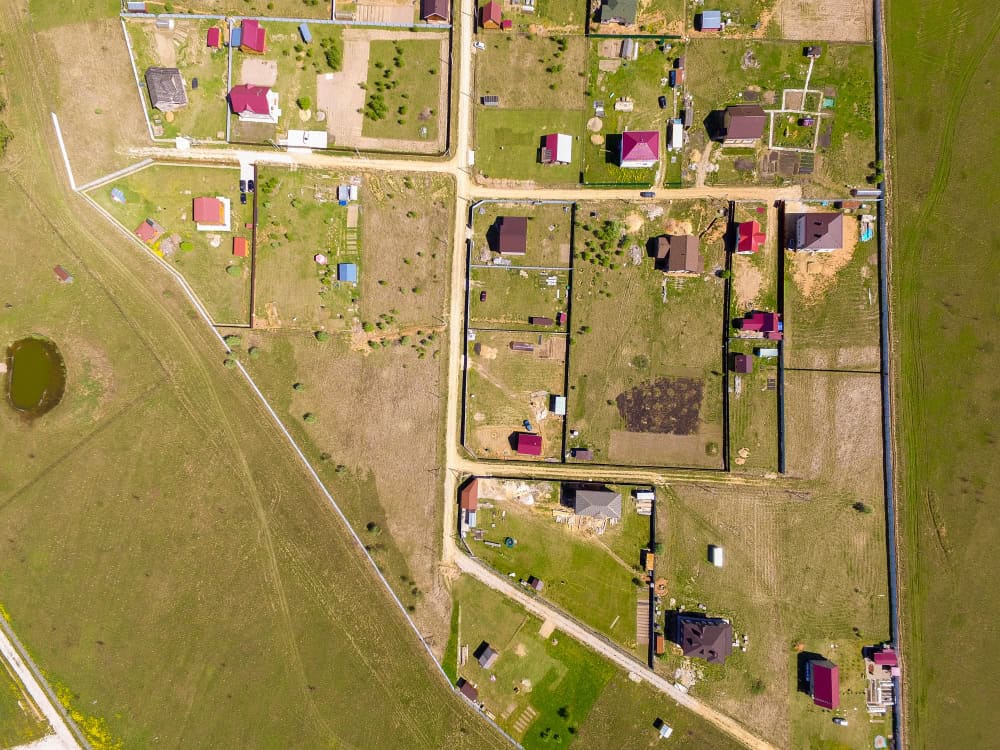
The simplest definition of “Survey” is a drawing of a parcel of land and its boundaries. The Survey can be more detailed, based on its intended use or purpose. For real estate transactions, it needs to also show any improvements (such as roads and driveways, fences, utilities, house, pool, and outbuildings), and any recorded easements, encroachments, rights of way, or setbacks that apply to the property. In Texas, these are prepared by Registered Professional Land Surveyors (RPLS) using detailed onsite measurements, the recorded plat (if any), and other records that can be obtained from the county’s Real Property Records (deed records).

You might hear people get specific when it refers to Surveys, because there are several different kinds. Here are only a very few of the types and descriptions of Surveys available in Texas.
-
Boundary Survey – used to establish or re-establish boundary lines or to gather data ahead of making a drawing of property lines. Once a Surveyor determines the boundaries, the monuments or pins (official markers) can be placed. Useful for tracts of raw land, preparing to subdivide or plat into lots, or for commercial properties. Some states call these “pin and stake surveys”. At least a Boundary Survey must be completed before a Surveyor can conduct Building Staking, the process of marking the exact location for proposed structures to be built.
-
Land Title Survey – most common for real estate transactions, particularly on residential property. It is performed to high standards based on the information that title insurance companies need if they are being asked to provide insurance on the survey with the title policy. Land Title Surveys provide more detail than a basic Boundary Survey.
-
TSPLS Surveys – A Survey executed to the standards of the Texas Society of Professional Land Surveyors. The TSPLS Manual of Practice breaks these down into categories based on type of survey and intended use. A Category 1A Land Title Survey is the most typical in residential transactions if there will be title insurance.
-
Standard Land Survey – shows the boundaries and improvements and can be used for conveying the property or for other purposes but cannot be used when the transaction is to be covered by a title insurance policy. This is a TSPLS Category 1B Survey.
-
ALTA Survey – a Land Title Survey executed to the national standards of the American Land Title Association - typical in commercial transactions.
-
Topographical Survey – shows elevations, contours, and drainage of the land’s surface, along with natural features and man-made improvements or structures. May be necessary prior to construction.
Old Survey vs. New Survey
An “old” or “existing” Survey is one that was prepared and certified outside of the current purchase transaction. By contrast, a “new” Survey is one which was (1) generated for the current transaction and (2) certified to both the current buyer and current title company. Some examples of “old” Surveys include:
-
Seller received the Survey from a previous owner when the Seller purchased the property (it is certified to someone other than the Seller)
-
Seller received the Survey as “new” when the Seller purchased the property (it is certified to the Seller’s name and the Title Company who insured the Seller’s title when they bought it)
-
The Survey was completed for a recent transaction which fell through (did not close), and it’s therefore not certified to the current buyer’s name and/or current Title Company -even if the Survey was done just a few days ago!
-
The Seller had a Survey done in the past for another purpose – such as a refinance or having work done on the property.
Re-Using an Old Survey
As you can see from the above, an “old” survey can be many years old, or only a few days old. To try to reuse an old survey for the current sale transaction, the Seller needs to be able to certify that there have been no changes to the property since the survey was done or, if there have been changes, the Title Company needs to be OK with them to move forward.
Certifying Known Changes or No Known Changes
As discussed in the beginning, when an old Survey is submitted for reuse, the Seller must provide either a signed and notarized T-47 Affidavit or a signed and sworn T-47.1 Declaration in Lieu of Affidavit, completed to disclose known changes to the property or no known changes since the survey was done. Both forms are promulgated by the Texas Department of Insurance. The Affidavit is used when the Seller will appear before a Notary Public and swear or affirm that the document is true and correct. The Declaration form was approved in late 2024 to allow the Seller to swear the same, also under penalty of perjury, but not have to find a Notary Public. On the Declaration form, the Seller must provide identifying information (date of birth) to assist the Title Company with verifying the signatures since the Seller is not appearing before a Notary Public. This means that the Declaration can be signed with ordinary electronic signatures; the only way to electronically sign an Affidavit would be via a Remote Online Notarization (RON).
-
Affiant/Declarant: the Seller. The forms and TDI regulations allow another person to certify if they have knowledge of the property, however the TREC contracts require all named Sellers to complete either the Affidavit or Declaration (at the Seller’s choice of form) but do not allow another person to issue the certification.
-
GF No. – Guaranty File Number. This is the Title Company’s internal file number for the transaction. If completing prior to contract and being assigned a GF number, it can be left blank.
-
Paragraph 4 lines – Seller must write “None” if there are no known changes as described immediately above the “EXCEPT”. If the Seller knows of changes, they must be described (more detail is better).
What Makes a Survey Potentially Ineligible for Reuse?
The primary evaluator for whether an old Survey can be re-used is the Title Company’s examiners and underwriters. Most of the time, the Buyer’s Lender will default to the Title Company’s evaluation and willingness to proceed with the old Survey. Above all, you must remember that the Title Company is evaluating risk for selling title insurance on the property, which is why each Survey and accompanying certification must be evaluated to determine if the old Survey is acceptable. Here are some examples of scenarios where an old Survey might be rejected:
-
Illegible and/or incomplete Survey. Illegible Surveys can’t be adequately reviewed. Even if legible, there are many required elements if the parties want to try to reuse it. If the Survey scan has been cut off or is missing elements, it will likely be rejected. Common missing items include: Surveyor’s name, seal/stamp, or signature; scale of the drawing; North bearing marking; street address (if applicable); legend; certification statement and date; complete and accurate legal description; verification of public access (public road or curb cut shown); missing improvements, boundaries, or easements.
-
Known issues with the Surveyor or Survey Company. If a Title Company knows that many Surveys issued by a particular Surveyor or company have had issues, they can reject all Surveys from the company or Surveyor because they deem them an unacceptable risk. This could include Surveyors who have had their professional license revoked. If the Surveyor is out of business or no longer licensed, the Title Company could reject those Surveys.
-
Seller fails to complete Paragraph 4 regarding changes or no known changes. The Affidavit or Declaration must be rejected if the Seller will not write anything in the blanks.
-
Certain improvements have been added, removed, or replaced. The title company judges each item based on risk. For example, if a fence was replaced along the exact same lines, the title company must know if the old posts were reused or replaced. If posts were replaced, there’s a risk that they were not replaced exactly as shown on the Survey. Another example would be the addition or removal of a swimming pool. If it is (or was) in the center of the property and not in danger of encroaching into an easement or otherwise affecting a boundary line, it may be an acceptable risk for some Title Companies. Sometimes the Title Company will ask the Seller to sketch additions onto their Survey as part of the certification.
-
Unsigned Affidavit or Declaration. Without signatures, the Seller has not certified anything.
-
Unnotarized Affidavit. The oath sworn in front of a Notary Public, accompanied by the Notary’s stamp and signature, is what turns the form into an Affidavit.
-
Seller certifies as of a different date than the date the Survey was created. Some Sellers want to certify only for the time that they have owned the property. Unfortunately, the forms require the Seller to certify all the way back to when the Survey was done.
-
Survey is too old, even if unchanged. Some Title Companies have adopted policies to reject all Surveys over a certain age due to the increased likelihood of prior changes.
-
Exact legal description of the property cannot be reliably ascertained. If land has been added, removed, or replatted, a new Survey is necessary to generate a new, correct legal description for the exact land that is being transacted.

Why might a Buyer want a new Survey, even if the old one is technically OK for reuse?
Recall from above that a “new” survey is certified to both the current Buyer and the current Title Company. When an old Survey is reused, the Buyer has no legal relationship with that Surveyor, nor does the Title Company. That means the Buyer and Title Company have no recourse against the Surveyor for any mistakes when the old survey is reused. If the Buyer isn’t obtaining title insurance coverage on the old Survey, there’s no one to fight on the Buyer’s behalf and no title insurance claim can be filed.

Learn More About Adding "Survey Coverage" to a Title Insurance Policy
Check out this blog post to review "survey coverage" on title insurance policies.
The Copyright Question
The issue of copyright with respect to property Surveys has been hotly debated for going on 30 years but, as yet, there are no definitive court cases deciding it once and for all. It is likely a fact issue to be argued for each individual Survey based on the required elements in US law for copyright protection. The chief element related to Surveys is the degree of creativity and originality employed by the Surveyor vs. drawing out factual information or information provided by other sources. For example, some of the statutory requirements a Texas Surveyor must follow involve exact and precise measurements and drawings based on plats or other recorded documents that leave no room for creative expression in the execution of the Survey. In many copyright lawsuits, if there is no other way to draw or express the information then it is not “original” enough to warrant copyright protection. But, that’s an issue for lawyers and courts to debate – not real estate agents.
Assume the Survey is copyrighted. The prevailing guidance from our real estate trade association attorneys is to err on the side of copyright protection for Surveys. If a Survey is copyrightable, then protection is automatically afforded the Surveyor (or their employing company) from the moment the Survey is completed – no copyright notice is required, nor is registration with the United States Copyright Office. A Surveyor can pursue damages for infringement (e.g. distributing copies or scans of the Survey), but the type of damages available depends on whether the Survey was registered with the Copyright Office. If a Survey is copyrightable, there is an additional school of thought that treats the Survey the same as a copyrighted book – that is, when you are finished with a book you can give or sell it to another person, but you understand that you cannot make copies or scans of that book and give them out without violating the copyright.
The least-risky scenario would be to obtain a new survey on each transaction. A measured-risk scenario would be to obtain the original survey (or one of the originals, as a Buyer typically receives a few originals at closing) and physically transfer it from Seller to Buyer with the real estate agent making no copies or scans, and not providing it to the world at large via MLS documents and the like. Let the lender and title company be the ones to risk making copies or scans. Obviously, the Buyer’s lender and Title Company need to see and examine that original survey, so it may be problematic to drive or mail it around to the interested parties for perusal. A more reckless approach would be to make copies or scans of the Survey and disseminate them freely.
-----
Bart Stockton is Associate Broker (TX & OK) and Chief of Operations for Paragon. An educator at heart, Bart writes and instructs continuing education courses focusing primarily on the topics of contracts, law, ethics, and risk reduction. Nothing in this post shall constitute legal advice; consult a skilled real estate attorney. ©2025 Bart Stockton Real Estate Education. All rights reserved. Used by permission.